
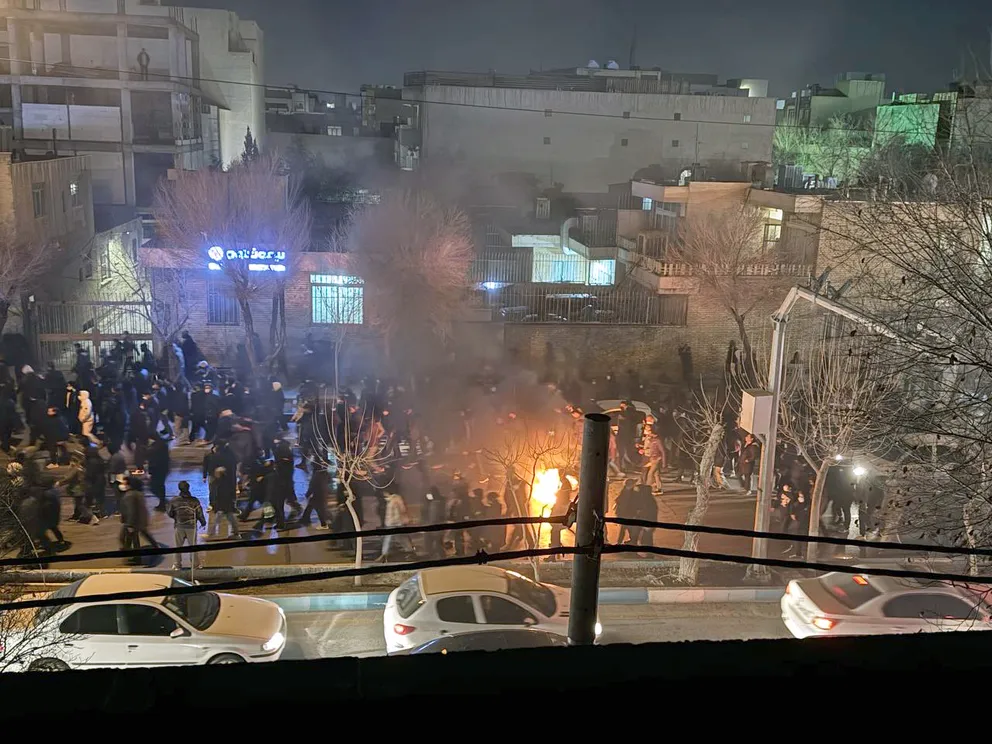
The purpose of this report is to deepen international understanding of contemporary labor challenges in Iran and to assess the extent and nature of worker mobilization. International visibility is a critical source of support for Iran’s labor movement, as recognition beyond national borders strengthens workers’ confidence that their struggles are not isolated or ignored. Moreover, a detailed appraisal of workers’ demands, together with the organizational strengths and limitations of trade unions representing them, can enable international donors to design targeted initiatives that respond more effectively to these realities and generate stronger outcomes. Drawing on its established networks inside Iran, VA is well placed to contribute such analysis. In light of the widespread street demonstrations that erupted in late December 2025—driven largely by economic hardship and demands for greater political freedoms—this report also contextualizes the broader protest environment in Iran, to which labor activism both contributed and within which it unfolded.
Iran’s labor sector is highly heterogeneous, and capturing the breadth of labor-related grievances and actions required extensive and methodical research. The analysis presented here relies on a combination of primary and secondary data. VA gathered firsthand information through interviews, including online conversations, with labor activists operating within Iran. These accounts were complemented by corroborated media coverage, existing academic and policy research, and systematic monitoring of social media activity.
From this body of evidence, several central findings emerge regarding labor conditions and worker protests in the second half of 2025:
The six months examined in this report show that labor protests in Iran emerged under the combined pressure of structural crises affecting wage earners: chronic inflation, austerity and shock policies, political and military instability, and the failure of official mechanisms to restore purchasing power or guarantee basic living standards. Workers, retirees, and employees across sectors face declining living standards, job insecurity, rising workplace accidents, and the expansion of deadly informal labor.
Overall, the findings show that labor protests during July–December 2025 were no longer merely responses to narrow, sector-specific demands. Instead, they increasingly took the form of actions centered on the “right to survival.” Escalating inflation, the collapse of purchasing power, postwar instability, and shock policies in currency, energy, and subsidies created conditions in which large segments of the working class, retirees, and wage earners faced direct threats to their livelihoods - and even to their lives.
The breadth and intensity of these protests correlated closely with key economic shocks during this period, including sharp currency devaluation, surging inflation, and sudden subsidy reductions. These shocks did not only deepen hardship; they also widened the social base of discontent. What began as labor unrest expanded into broader street protests as households across Iran experienced a shared sense of economic collapse and state failure.
In response, the government’s approach has largely avoided dialogue, wage adjustment, or reform of support structures, relying instead on security containment, soft control, judicial case-building, and administrative pressure. This widening gap between the lived reality of wage earners and the state’s official narrative has fueled the persistence and growing radicalization of labor protests in workplaces, as well as their increasing convergence with broader social unrest.
At the same time, the state’s systematic restriction of political freedom and the right to free association has further undermined trust in official institutions. Independent unions and workers’ organizations are blocked or criminalized, peaceful protests are treated as security threats, and labor activists face arrest, intimidation, and legal prosecution. This repression not only violates core labor and human rights standards, but also deepens the democratic deficit in Iran, as workers are denied the basic mechanisms of collective representation and social participation.
From this perspective, the labor protests documented here are not isolated incidents but part of a broader crisis in labor relations, economic governance, and political legitimacy. Without structural economic, social, and political reforms - including meaningful wage adjustment, social protection reform, and genuine political freedoms, including the right to free association - the intersection of labor unrest and wider street protests is likely to persist, with increasing intensity and higher social cost.
The six months examined in this report show that labor protests in Iran have taken shape amid the simultaneous weight of several structural crises on wage earners’ lives: chronic and accelerating inflation, the government’s austerity and shock policies, instability driven by military and political tensions, and the failure of official mechanisms to restore purchasing power or guarantee basic living standards. In this context, workers, retirees, and employees across different sectors are facing not only a steady decline in living standards, but also job insecurity, rising workplace accidents, and the expansion of deadly forms of informal labor.
An examination of how the government has responded to these conditions shows that instead of offering structural answers (e.g. welfare policies instead of austerity) to economic and social demands, the dominant strategy has been the securitization of protests, the control of union and professional activity through oversight bodies, and the use of judicial and administrative pressure. While this approach may lead to the temporary, superficial containment of protests, in practice it has deepened distrust, eroded social capital, and shifted the crisis from workplaces to broader layers of society.
From this perspective, the labor protests documented in this report should not be seen as isolated incidents, but as signs of a persistent crisis in labor relations, livelihoods, and economic governance - a crisis that, if the current course continues, is likely to reemerge in the coming period with greater intensity and higher social costs.
Key labor trends January - June 2025
1. Layoffs in the post-war period
After the end of the war and the economy’s entry into what the government called a phase of “reconstruction and adjustment,” workforce downsizing became one of the dominant trends in manufacturing, services, and project-based sectors. Workshop closures or partial shutdowns, reduced production capacity, stalled development projects, and the termination of temporary contracts left thousands of workers suspended or dismissed. These layoffs abruptly stripped workers of even minimal economic security. In many cases, employers absolved themselves of responsibility by citing “emergency economic conditions” or “declining orders,” while oversight bodies played little effective role in protecting labor.
2. Expansion of protests across industries and services
Alongside intensifying economic pressure, the scope of labor protests during the period expanded noticeably, spreading from large industrial units to services, education, bakeries, and contracting companies. Protests largely centered on unpaid wages, low pay, temporary contracts, job insecurity, and layoffs, and in many cases took the form of street gatherings, short strikes, or workplace sit-ins. Although many protests were interrupted by repression or lack of response, their repetition and wide geographic spread reflected the depth of discontent and the blockage of formal channels for pursuing labor grievances.
3. The livelihood and existential crisis of workers
Workers’ livelihood crisis went beyond a simple loss of purchasing power, turning securing food, housing, healthcare, and education into a daily struggle. Runaway price increased for basic goods, rent, and medical costs, combined with the failure to adjust wages and delays in paying legally mandated salaries, pushed large segments of the workforce below the poverty line. Reports of skipped meals, second and third jobs, forced migration, children dropping out of school, and even worker suicides illustrated a reality in which survival had replaced a dignified life for much of the working class.
4. The continuation of repression and security-based responses
Throughout the six months reviewed, security measures against workers’ collective action and labor activists continued, and in some cases intensified. Summonses, arrests, threats, court rulings, workplace dismissals, and pressure on professional associations were all used to contain protests and prevent worker organization. This security-driven approach not only refused to recognize economic and professional demands but treated any form of collective action as a threat, effectively closing off the space for social dialogue.
5. Legal reforms affecting workers’ conditions
During the period, a range of bills and initiatives related to the labor market and social policy were placed on the agenda of the government and parliament. While presented as efforts at “structural reform” or “organization,” taken together they signaled a redefinition of the state’s role and a shift of part of the economic crisis onto labor. From (forced) insurance for ride-hailing drivers and construction workers to revised regulations on hazardous jobs, reorganized government employment, consolidated pension funds, and cut or reduced subsidies, these policies focused less on strengthening job security and social protection than on managing resource shortages and reducing institutional obligations. The central role of bodies such as the Social Security Organization, parliament, and the Ministry of Cooperatives, Labor and Social Welfare in advancing these policies had direct consequences for wages, insurance coverage, pensions, and the quality of life of millions of workers and retirees, heightening the risk of deeper job insecurity, social inequality, and outright poverty.
6. A two-tier system of access and privilege
In many government institutions, access to employment, promotion, and economic opportunity became increasingly shaped by political connections, patronage, and personal networks. This two-tier system rewarded individuals with ties to the Revolutionary Guards, political elites, or influential institutions, while ordinary workers faced discrimination, job insecurity, and limited upward mobility. The result was a growing sense that state institutions served a privileged minority rather than the public, undermining trust in governance and reinforcing social inequality.
7. The ongoing economic crisis and the widening gap between wages and inflation
Ultimately, what linked all of these trends was the persistence of the economic crisis and the deepening structural gap between wages and inflation. While inflation climbed close to 50 percent and rising prices made everyday life more difficult month after month, wages not only failed to keep pace, but in many cases were not even paid in full. This structural gap trapped workers in a cycle of chronic poverty, debt, and psychological exhaustion, darkening any prospect of improvement. It shows that Iran’s labor crisis is not temporary or merely the result of external shocks, but is rooted in existing policies and deeply unequal economic and governance arrangements.

In light of the trends outlined in this report—from the rise in workplace accidents and the expansion of informal and dangerous labor to institutional repression, livelihood crises, and labor-costly legal reforms— the following recommendations can serve as a strategic roadmap for international labor and human rights organizations and activists:
Overall, combining legal pressure, careful documentation, support for independent organizing, and transnational solidarity can help international organizations and activists move beyond expressions of concern toward meaningful action in support of workers in Iran.
Treating livelihood crises as a security problem does not resolve them; it deepens the state–society divide and pushes protests toward more radical forms.
Implementing so-called “economic surgery” amid high inflation and a collapse of public trust escalates social unrest and lacks any social mandate.
Replace austerity with welfare-centered policies, while tackling structural corruption and reducing the oligarchic concentration of economic and political power.
Immediate release of detained protesters, an end to security prosecutions, and guaranteed access to medical treatment are preconditions for any de-escalation.
Without the ability for independent professional, labor, and civic organizations to operate, there is no mechanism for social bargaining or the transmission of demands.
Cutting internet access violates the right to information and destroys many small online businesses. It exacerbates livelihood crises and social discontent, angering youth and teenagers—an important segment of the protest base. Additionally, this action heightens fears of state-led repression and concealment.