
A primary goal of Volunteer Activists (VA) is to enhance global awareness of pressing labor challenges and labor protests occurring in Iran. Recognizing the voices of Iranian workers on an international platform is vital for the progress of the labor movement in the country. Furthermore, a thorough understanding of the needs of Iranian workers and the demands of their trade unions allows international supporters to design more effective programs and initiatives. With its established connections in Iran, VA is well-equipped to provide this essential information.
This report outlines our findings on labor-related issues and protests in Iran from January to June 2025 – as well as an analysis of (potential) legal changes that may impact labor conditions in the country. It marks the sixth installment in a biannual series aimed at delivering consistent updates on labor dynamics and demonstrations within Iran.
The intricate nature of the Iranian labor landscape necessitated thorough and detailed research to accurately represent the current state of labor issues and challenges. Our evaluation incorporated various sources, including reliable media reports, social media analysis, and discussions with our contacts in Iran.
From our research, several significant insights regarding labor issues and protests in Iran from January to July 2025 have emerged:
The first half of 2025 has been a highly challenging period for Iran‘s working population. Issues such as severe poverty, a lack of affordable housing and hazardous working conditions not only persisted from previous years but also worsened. Still, the Iranian government prioritized the securitization of labor struggles over addressing the urgent socio-economic needs of its citizens. While some concessions were made, they were minimal and largely insufficient. For instance, the increase in the minimum wage, though slightly higher than in previous years — possibly due to fears of renewed protests — remains below the rate of inflation in Iran.
Key labor trends January - June 2025
1. Relentless Wave of Nationwide Labor Protests
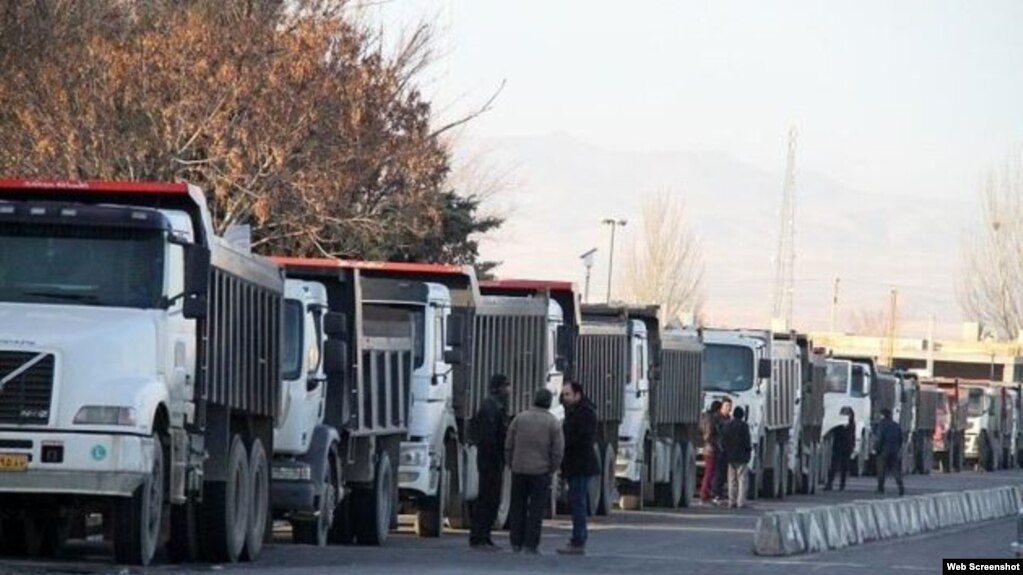
In the six-month period covered by this report, more than 80 protests and strikes have occurred monthly in at least 25 Iranian cities. These protests span across retirees, truck drivers, farmers, bakers, heavy industry workers and public service personnel, indicating a collapse in even the minimum standards of job-related welfare in the country.
2. Anti-Worker Legislative Reforms
New regulations, such as amendments to the hazardous and arduous jobs directive, have been passed contrary to workers’ interests. These changes restrict early retirement and transfer the authority to assess job difficulty to institutions not representing workers, such as the Social Security Organization.
3. Infrastructural Crisis and Job Insecurity
Power outages, production disruptions, and incidents like the explosion at Shahid Rajaee Port have placed workplace safety and job security in a state of crisis. Industrial workers, farmers, and bakers have become victims of infrastructural mismanagement.
4. Increased Security Crackdowns
Labor activists got severely targeted and protests often met with government repression. For instance, the strikes by truck drivers and farmer protests were met with widespread arrests and heavy-handed security responses. More than 40 drivers were detained during the recent truck drivers’ strike.
5. Wartime Living Conditions
Following Israeli attacks on Iran some workers were killed or got severely injured due to attacks by Israel, companies were forced to shut down.
6. Economic Crisis and Decline in Purchasing Power
Despite rampant inflation, the minimum wage for workers remained around $200 per month — a figure drastically lower than the actual cost of living (estimated at $255 to $325 per month). Currency instability and industrial recession have worsened this economic decline.
The government responded to specific sector demands during protests and strikes, but these favorable actions were confined to only a handful of demonstrations. Although online protests serve as a vital outlet for ordinary Iranians to express their concerns, the impact of online petitions and campaigns has also been either negligible or minimal.
In addition, the first half of 2025 witnessed the 12-day armed conflict between Israel and Iran in June, which severely impacted Iranian workers. The conflict resulted in widespread layoffs, with Afghan workers facing heightened deportations. Furthermore, national security concerns frequently provide authoritarian governments with a pretext to suppress dissent, potentially leading to intensified crackdowns on independent labor activists in the near future. Finally, the rising risk of military conflict is likely to shift public spending toward defense, sacrificing workers’ social welfare, healthcare, and insurance.
Amidst all these problems, there are also glimmers of hope, however. Notably, a strong sense of national unity emerged around larger protests. For instance, the strikes by truck drivers garnered support from various groups. Conversely, the drivers expanded their focus from sector-specific issues to broader socio-economic and political concerns impacting Iranian society. This reflects the increasing determination of Iranians to advocate for their socio-economic rights and justice, along with a deepening sense of solidarity among them.
Additionally, this period underscored the power of sustained protests and perseverance. While truck drivers and bakers hold considerable leverage as gatekeepers to essential goods, the same cannot be said for the telecom retirees. Nevertheless, thanks to their weekly protest gatherings, the government also made concessions to this group by providing them with additional income.
Furthermore, the attacks by Israel did not lead to radicalism; Iran‘s independent trade unions continued to uphold democracy, non-violence, and the protection of human rights as their guiding principles, despite the lack of a historical precedent for genuine democracy in Iran. This indicates that investments in programs aimed at fostering civil society in Iran can yield positive results and contribute to creating a more supportive environment.
Another noteworthy aspect is that, despite the absence of strong independent unions in Iran that can openly play their role, labor activism continues to occur. The truck driver strikes coordinated solely online by the National Union of Truckers and Drivers. As the government fosters fear and anger in the wake of the Israeli attacks and with increased securitization looming, it is crucial for Iran‘s civil society to continue playing its vital role. The same holds true for when renewed armed conflict between Israel and Iran might occur. To support this process, the following actions are proposed for Iran‘s trade unions.

Finally, the international community can significantly contribute to the protection of workers‘ rights in Iran by supporting both independent trade unions and the Iranian government through the following actions:
Meanwhile, to ensure that workers’ rights can be upheld as much as possible in times of renewed conflict with Israel or the U.S. – as well as in times of an economic crisis – the Iranian government could consider the following:
A new independent body should be created under the High Council of Labor to cover exceptional situations such as war, sanctions, natural disasters, or sudden economic shocks. This institution must be supported by predictable funding sources (e.g., public budget allocations, a share of oil revenues, or wealth taxes) and operate transparently to distribute wage insurance and unemployment subsidies to affected workers.
In times of national crisis, the government should directly pay a portion of workers’ wages to prevent businesses from downsizing. This model, implemented in countries such as Germany, Japan, and Turkey, helps preserve jobs during emergencies. For example, the government could cover 30–70% of monthly wages for a period of six months to a year.
The government should immediately halt tax and social insurance collections from small businesses in crisis zones and grant temporary exemptions. As many tourism operators, restaurants, guesthouses, and digital platforms face severe downturns, additional financial pressure could lead to widespread closures and job losses.
The Ministry of Cooperatives, Labor, and Social Welfare should establish a public platform where workers 31 can report unlawful dismissals or unpaid wages directly and quickly. On-site inspections in large enterprises must also be intensified.
Employers who shut down factories or production units during war or crisis must rehire the same workers once operations resume, as mandated by Article 30 of the Labor Law. The government must ensure this provision is enforced and take legal action against violators.
In collaboration with local NGOs and municipalities, the government should deliver immediate livelihood aid—including food baskets, shopping vouchers, or targeted cash transfers—to workers who lose their jobs during the crisis. These supports must go beyond the ineffective monthly credit subsidy model and directly address households’ daily needs.
Given that platform workers (e.g., ride-hailing drivers, online sellers, freelancers) are excluded from traditional legal protections, the government must establish an independent fund to support them during emergencies. Funding could come from special levies on large online platforms or international assistance.
Companies receiving direct or indirect government financial support—including airlines, mining and petroleum firms, and tech companies—must be legally barred from laying off employees during crisis periods. Violation of this ban should carry substantial financial penalties.
Develop a “National Job Retraining Plan” for Laid-Off Workers
The government should fund intensive training programs to help laid-off workers acquire new technical, digital, or vocational skills through public and private training centers. This initiative can facilitate quicker reentry into the job market and reduce the psychological toll of unemployment.